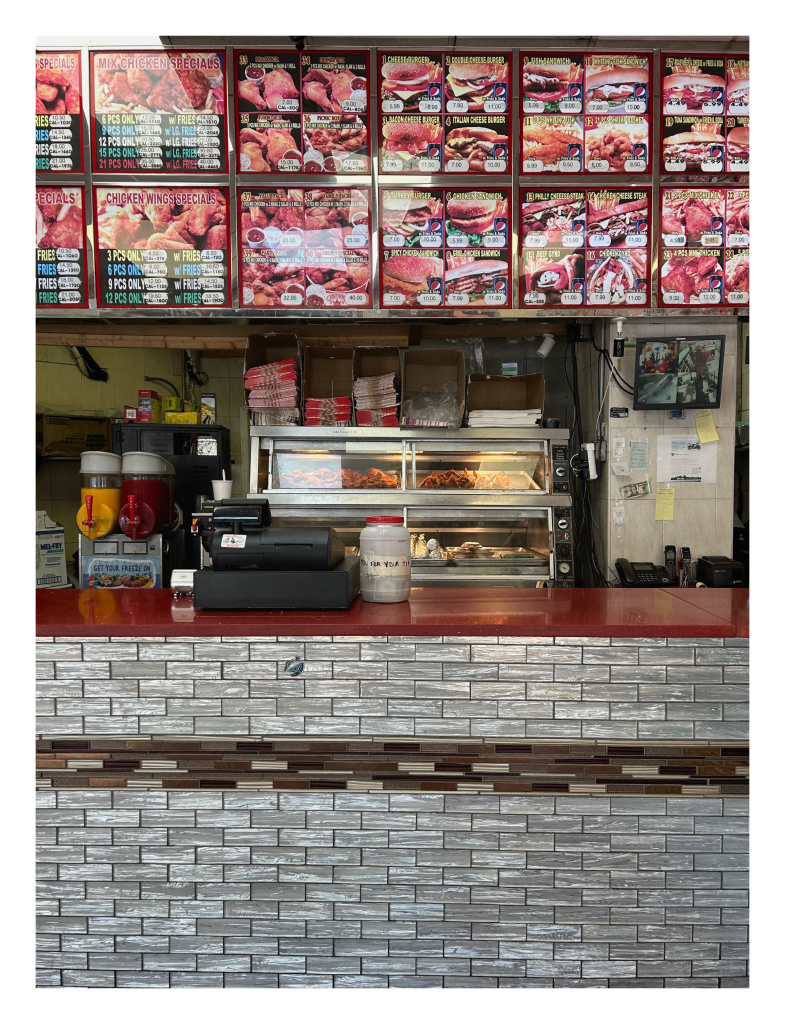
This week I celebrated one year in the new apartment. But at what cost?!!?! Moving here meant leaving my favorite local food spot. It’s only 3/4 of a mile away now, but that’s a big difference from when it was literally right around the corner. Even today I refer to it not by its proper name but as “Around the Corner”. It’s that kind of love.
It’s become less of a routine visit, and more of a rare treat. But on Friday afternoon, with a fresh school victory and sunny afternoon to soak it in, I went for a long walk and paid a visit. For a few hours, the world was right again.
Running
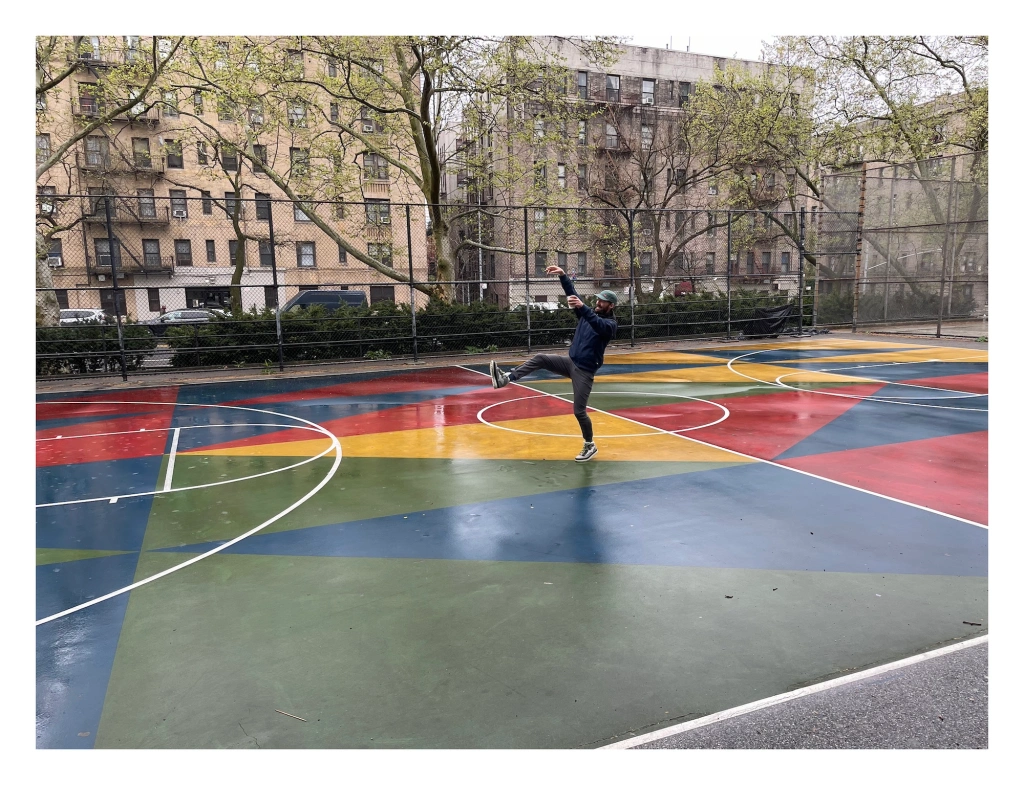
I had two long runs bookending the same calendar week. Felt the toll, a little sluggish on yesterday’s, but also felt decent enough for a light run on today, day 8. The last couple years, I’ve had a pretty steady drumbeat of running on Tu/Thu/Sat, usually with one of Sun/Mon/Wed mixed in, depending on schedule. Now I’m thinking I’d like to introduce those light, short runs more frequently, bump it up to ~5/7 days each week. Motion is lotion.
Books
There’s Always This Year: On Basketball and Ascension. “It is one thing to experience death and another to understand it to be possible on its own terms. To grasp the certainty of its arrival but still cling to a hope for that certainty to come in a very specific way, at a very specific time, after a life has fulfilled all of its promise.” Hanif Abdurraqib is a tremendous writer. This has a more memoir-y, reflective, prayerful? voice than I’ve heard from him before, took a bit of adjustment to learn to fly with him. I’d recommend it and especially the ones I read previously: A Little Devil in America: Notes in Praise of Black Performance and They Can’t Kill Us Until They Kill Us.
School
Finish one class, start a new one. Rinse, repeat. I’m ~86% done with this degree, and feel a breeze at my back.
Music
Another great playlist from Matthew Perpetua took up most of my listening week, spinning me out in a few directions: The Dawn of Alternative, 1988-1990. So cool to hear stuff I recognize from childhood alongside stuff I only learned about later in life, and seeing how those contemporaneous threads all flowed together. I ended up doing a lot of scattered samplings, and not much full play-throughs. The main effect was to get me listening Depeche Mode again.
But I did dip into The Sundays, Reading, Writing, & Arithmetic. I like “A Certain Someone“.
And I listened to The Church and realized they’re the ones who sing “Under the Milky Way“.
Unrelated to the initial playlist, I liked Vanishing Twin’s “Choose Your Own Adventure“. In particular: “Eggs” and “Truth Is Boring” (tabla!).
Articles & Episodes & Twoots
Problems need solutions, not explanations. I might suggest “not only”, but still an underappreciated point.
Compelling thread of research on crime victims. It’s very good and worthwhile to combat all manner of crime and its causes!
Jerry Seinfeld on The New Yorker Radio Hour. “I don’t like old people, period. They don’t look good. Everything’s going, everything’s deteriorating, I don’t wanna see this. […] I feel like God is like, ‘I’m with ya up to about 38. If you wanna stay, you can stay. But I’m moving on.'”
“There’s no secret sauce, no special workout or electrolyte drink that will unlock your potential and fuel your dreams. At the end of the day, there’s just you, doing the best you can with what you got, day after day and run after run.”
A series of posts about writing/illustrating a bikepacking manga.
Movies
Road House (1989). I’ve watched this a handful of times – TBS afternoon staple – but I think I’d never seen this without commercial breaks. And it had been a long time since the last time. Patrick Swayze’s charisma is on another level. I dig the traditional orchestral soundtrack, with moment-to-moment exclamations and punctuations that feed into the action. A lost art.
Anyone But You. Something is off here. I appreciate a few elements of the production design, like the scene transitions – neon sign in the bar and a diegetic piano backing score in particular. The line delivery from our mains feels a little dry sometimes. Too neat, too calm? I could see it being “in character”, with our protagonists not wanting to lose their cool or show weakness. But the effect is cold. It’s such contrast with their initial meet-cute, and later escalations and resolution of the romance. Need more consistent voltage to keep us attached. The parents are stronger roles. Here I’ll again register my complaint of defaulting to wealthy/comfortable people on screen. It’s fabulous to look at, but boy can it be stale. A few genuine laughs, though, and maybe it will get you to read more Shakespeare.
The Warriors. Contrasting with the above – such zest here! Scrappy energy, style, grit, invigorating soundtrack. With a few years in New York City under my belt, it’s gotten more an more enjoyable to see things I recognize on screen. The subway in the 1970s-80s looks like a nightmare. I like how they capture the fundamental spookiness of an empty platform. Really appreciate the variety in costuming, and each gang’s schtick. The radio DJ had me thinking about the switchboard ladies in John Wick, broadcasting the bounties. I don’t want to see a straight-up remake (I’m glad we’ve largely gotten rid of homophobic slurs, by the way. It’s so jarring.), but it’s still fun to imagine what those contemporary gangs and costumes might look like.
The Clovehitch Killer. A straightforward thriller – what if you learned your parent was a long-dormant serial killer? – that starts well and stumbles toward the finish line. I think they show us more than we need to see. Dylan McDermott and Charlie Plummer are both great. There are few things I like in a movie more than riding bikes around small towns.
TV
X-Files, s2e9, “Firewalker“. I remember this one from childhood. That kind of body horror sticks with you. Leland Orser and Bradley Whitford guest appearances!
Bodies, s1e3. I didn’t know Samuel Barber adapted his Adagio for Strings into the Agnus Dei we hear at the close of the episode.
Shōgun, s1e7. Things aren’t looking good for Toranaga-sama.







 Mark Larson